
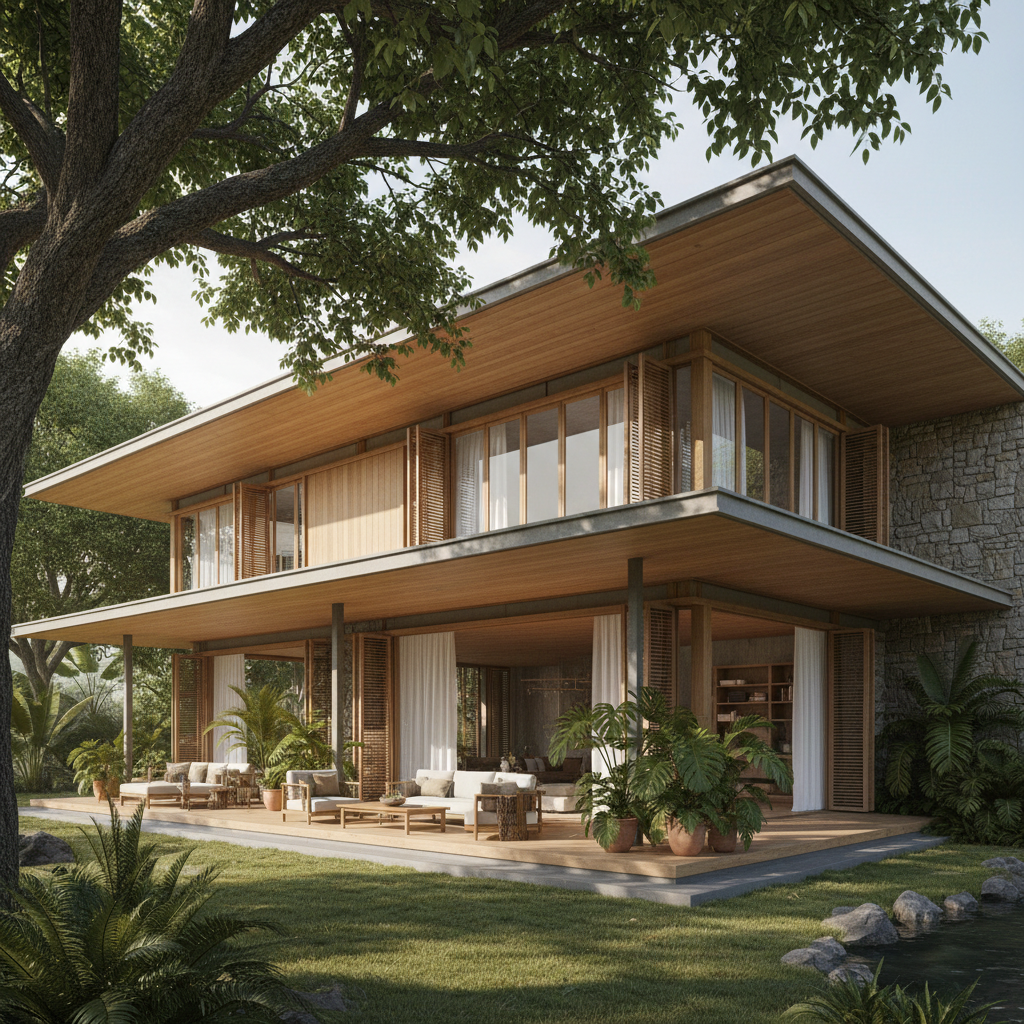
Blending climate-responsiveness, aesthetics, and sustainability for the diverse landscapes of Bangladesh.
In the unrelenting pursuit of urbanization, the skylines of Dhaka and Chattogram have been saturated with hermetically sealed glass monoliths—structures that maintain an adversarial relationship with our environment. At FusionStruct, we champion a profound shift back to "Breathing Architecture." This is not merely an aesthetic preference; it is a pioneering response to the Deltaic context.
"Is a residence truly exemplary if it necessitates continuous artificial climate control to remain habitable? Architecture here is not about isolation; it is about conversation—with the wind, the rain, and the verdant green of the land."
THE HARMONY OF PLACE
Bangladesh's challenging tropical climate necessitates thoughtful architecture. Tropical Modernism is a harmonious, suitable, sustainable, and beautiful approach adaptable to all budgets and settings. It promises an enhanced quality of life by designing with the climate, rather than against it.
Visual Narrative: Heritage
Exploring the intersection of local materials and contemporary design. In the rural context, we see bamboo, brick, and terracotta blending seamlessly with lush paddy fields.
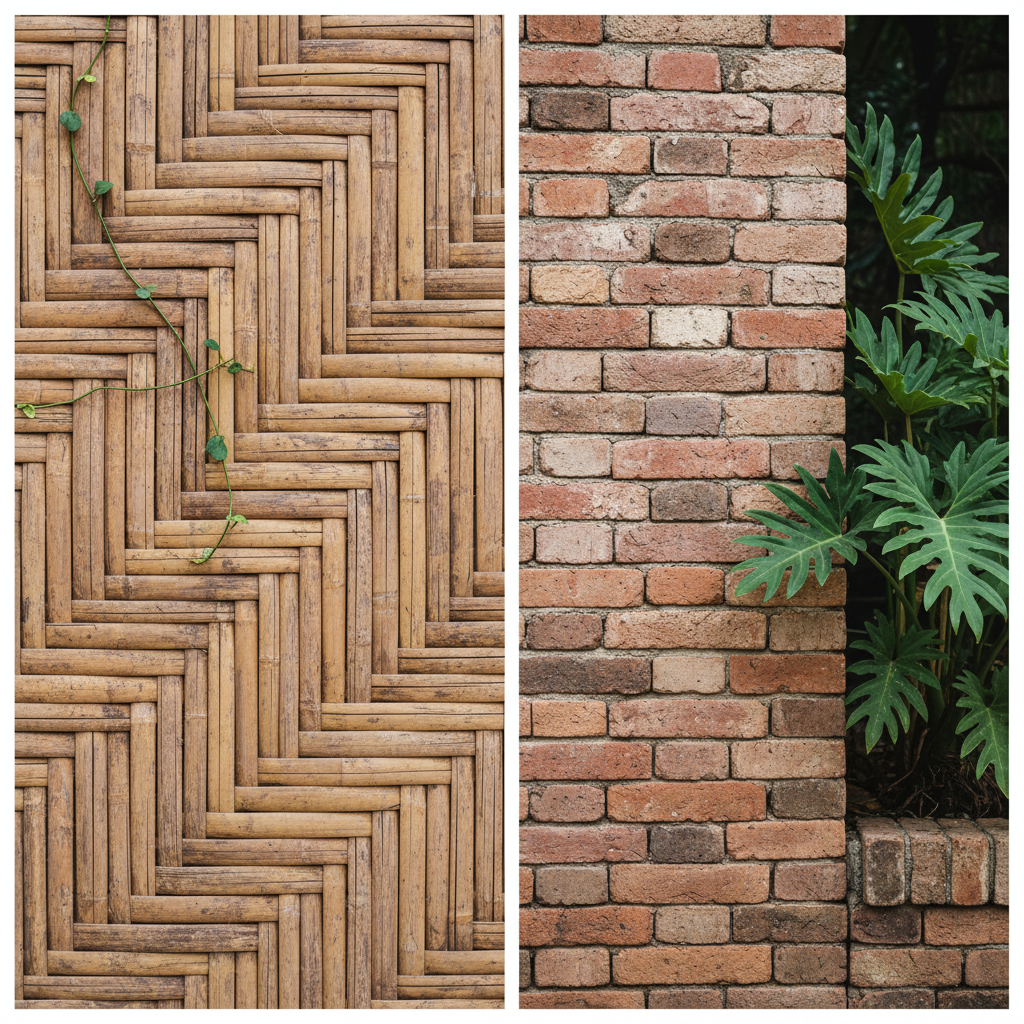
Fig 1. Tactile Materiality: The juxtaposition of intricate bamboo weaving and exposed brickwork.
URBAN EVOLUTION: THE CITY OASIS
In the dense urban fabric, Tropical Modernism manifests as vertical gardens softening concrete facades. It creates an interior flow that defies the rigidity of the city. Green elements aren't just decorative; they offer thermal insulation, improve air quality, and mitigate the urban heat island effect.
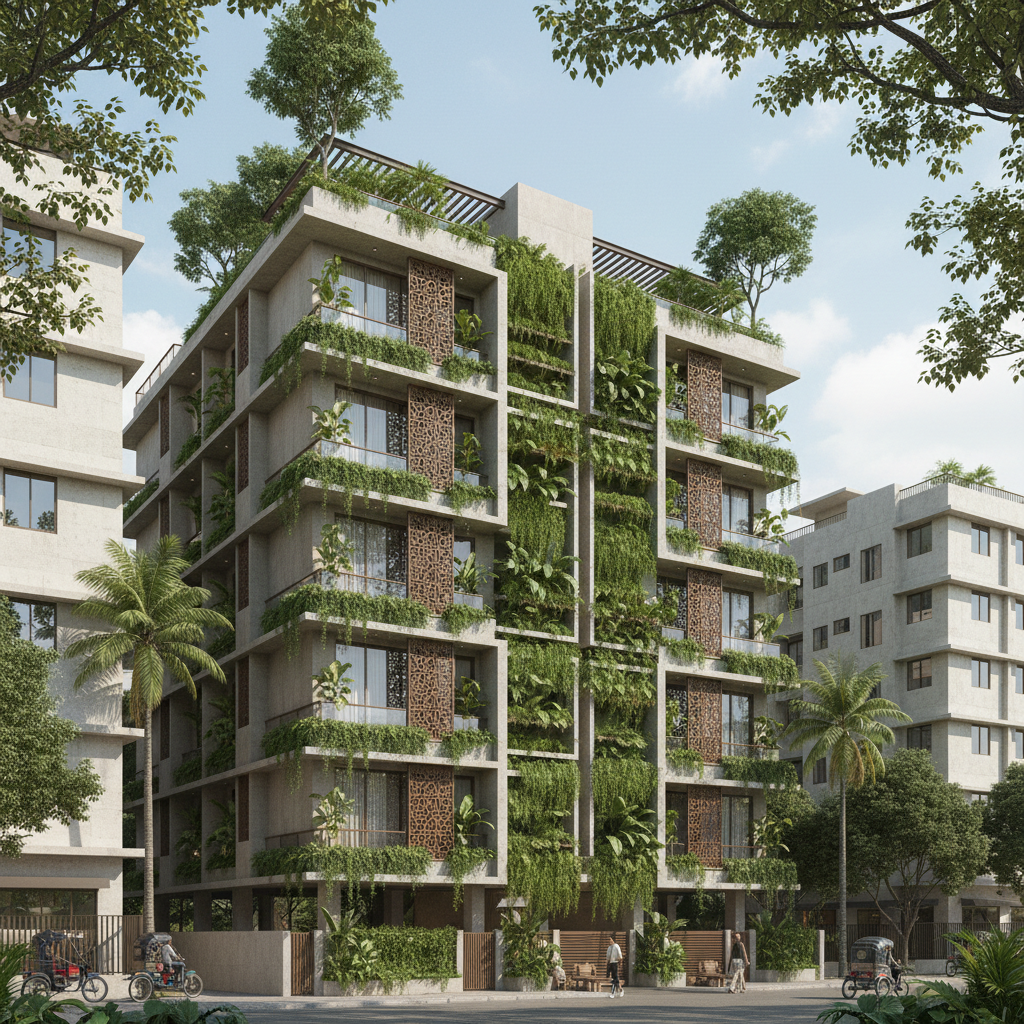
Fig 2. Vertical gardens softening the concrete facade in dense urban settings.
DESIGNING FOR THE MONSOON
Tropical architecture in Bangladesh designs with the climate, rooted in passive principles to maximize comfort. It leverages natural elements like ventilation, shade, and landscape integration to combat heat and humidity.
- Shading Strategies: Deep overhangs and wide verandas shield interiors from intense sun and monsoon rains, keeping the core structure cool.
- Cross-Ventilation: Large, strategically placed windows and open floor plans facilitate the movement of air, naturally lowering temperatures.
- Evaporative Cooling: Internal courtyards and integrated water features act as natural heat sinks.
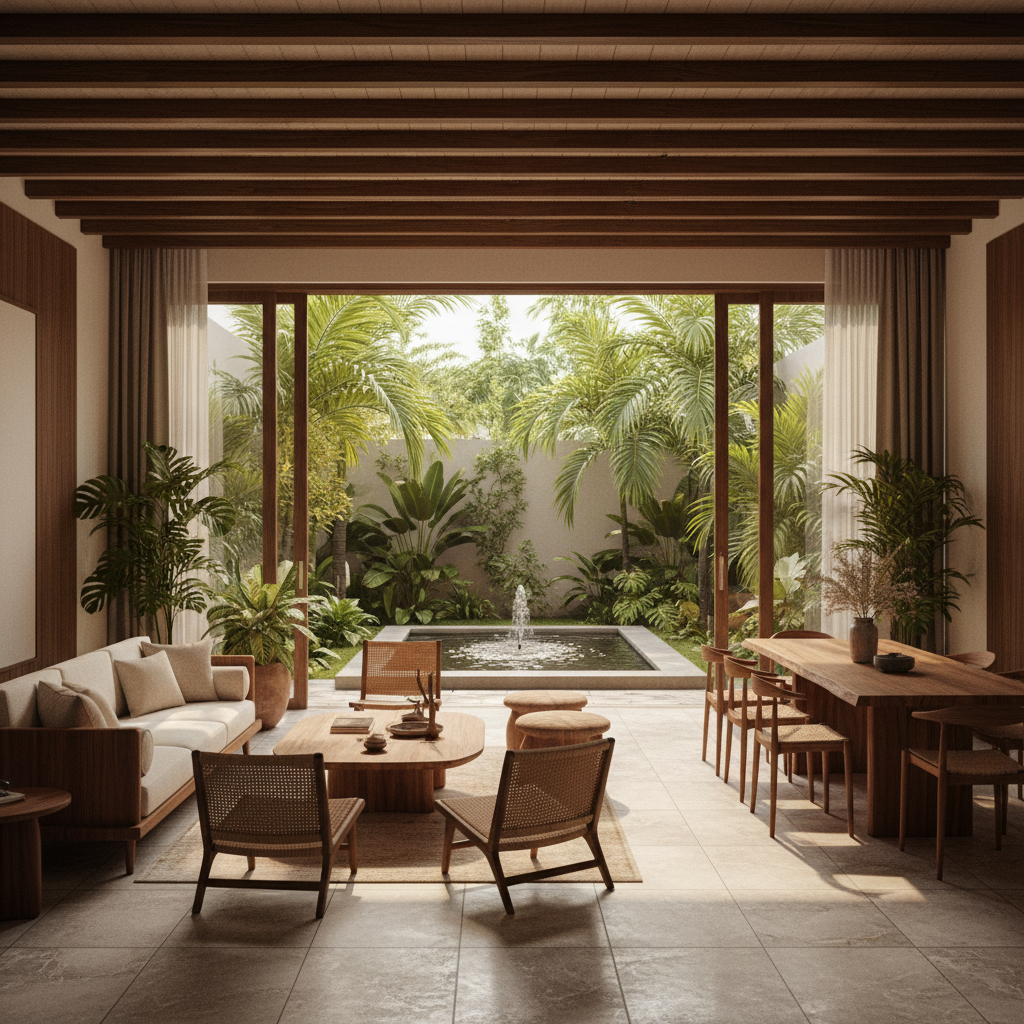
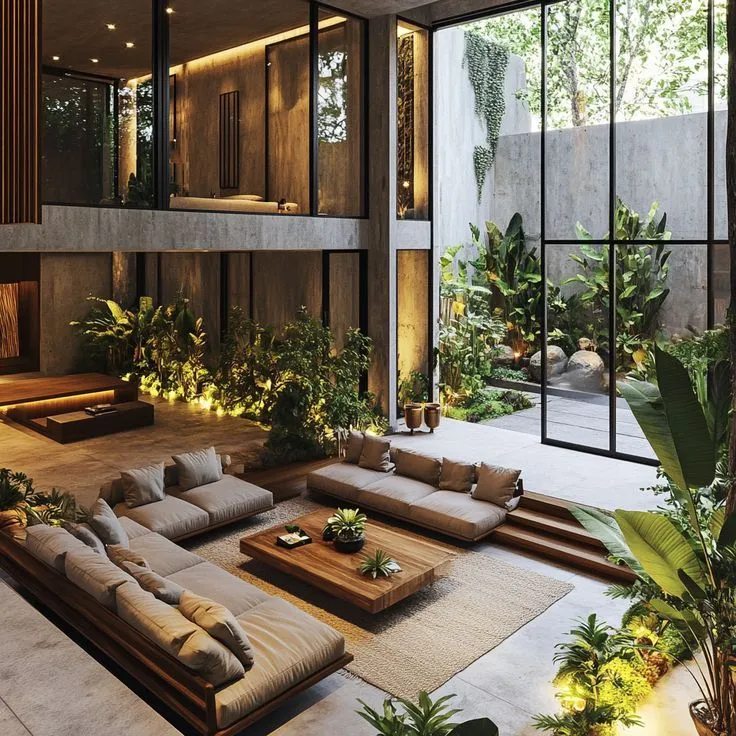
Fig 3. Blurring boundaries: Seamless integration of indoor living and outdoor nature.
GEOMETRIC ADAPTATION & RESILIENCE
The aesthetic of Tropical Modernism is driven by functional necessity. Designs typically avoid flat, unshielded West-facing walls, instead employing the "Parasol Roof" concept.
Fig 4. Deep overhangs and louvers used for solar protection.
The Jali Screen
Perforated screens like the Jali provide privacy and security while allowing continuous airflow. This modulates light and maintains an internal microclimate.
Fig 5. The interplay of light and shadow through traditional Jali work.
Tropical Modernism is more than a style; it is a blueprint for healthier, more comfortable, and sustainable living. By constructing climate-appropriate buildings, we foster a vibrant architectural future that exists in harmony with the land, rather than in opposition to it.


Discussion