
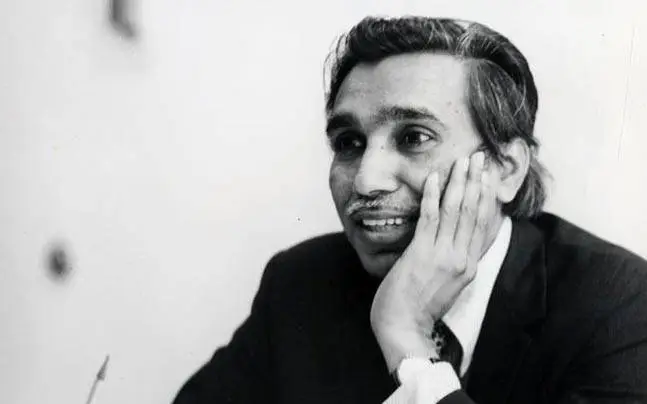
A Philosophy of Enduring Work
“My philosophy has always been that man is born, man lives, man dies — but what remains is his work.”
These words capture the essence of human legacy. For engineers and builders, that work is written in steel, concrete, and the skylines that endure long after lifetimes have passed. At FusionStruct Engineering, we believe structures are more than physical forms—they are testaments to vision, discipline, and clarity. Few figures embody this truth more profoundly than Fazlur Rahman Khan, the Bangladeshi-American engineer whose innovations reshaped the modern city and redefined what it means to build for eternity.
Early Life and Education
Fazlur Rahman Khan was born on March 4, 1929, in Dhaka. His father, a mathematics teacher, instilled in him a love for numbers and analytical thinking. Khan pursued civil engineering at Bengal Engineering and Science University before earning a degree from what is now BUET.
In 1952, a Fulbright Scholarship carried him to the University of Illinois, where he completed two master’s degrees and a PhD in just three years. This rapid ascent reflected not only his brilliance but also his relentless drive—a trait that would define his career.
The Rise of a Structural Visionary
By 1955, Khan joined a Chicago consulting firm, and by 1966 he became a partner at Skidmore, Owings & Merrill (SOM). It was here that he introduced the tubular structural system, a breakthrough that revolutionized skyscraper design.
Traditional skyscrapers relied on dense internal columns, limiting flexibility and driving up costs. Khan’s tubular system placed closely spaced columns around the building’s perimeter, creating a rigid “tube” that resisted lateral forces like wind and earthquakes. This innovation allowed interiors to open up, reduced material use, and made taller buildings economically feasible.
His first application was the Plaza on DeWitt in Chicago (1966), a 43-story tower. Soon after, the system was adopted for the World Trade Center towers in New York. Khan refined the concept further with the trussed tube system used in the John Hancock Center (1969), a 100-story mixed-use skyscraper with X-braced exteriors that could withstand hurricane-force winds.
But his crowning achievement was the Sears Tower (now Willis Tower), completed in 1973. At 110 stories and 1,451 feet, it became the tallest building in the world, holding the title until 1998. Khan’s design used nine square tubes in a 3x3 matrix, tapering at the top to create a structure both monumental and efficient. Even today, it remains one of the tallest buildings in the Western Hemisphere.
Beyond Skyscrapers
Khan’s genius was not confined to high-rises. He designed stadiums, airport terminals, and even scientific facilities like the McMath-Pierce solar telescope in Arizona. His versatility demonstrated that structural clarity was not a niche skill but a universal principle. Whether shaping urban skylines or enabling scientific discovery, Khan’s work embodied the philosophy that engineering is both science and art.
Legacy and Recognition
Khan passed away on March 27, 1982, in Jeddah, Saudi Arabia, at the age of 53. His career, though brief, left an indelible mark on the world. He is remembered as the “Father of Tubular Designs,” a pioneer who redefined skyscraper construction and reshaped modern cities.
His influence extended beyond technical innovation. Khan was among the first to embrace computer-aided design, integrating technology into engineering practice. He also championed interdisciplinary collaboration, bridging the gap between architects and engineers. In doing so, he embodied FusionStruct’s belief that clarity, traceability, and replicability are essential to enduring structures.
FusionStruct’s Perspective
At FusionStruct Engineering, we see Khan’s life as a profound illustration of our guiding philosophy. His words—“man is born, man lives, man dies — but what remains is his work”—remind us that structures must be more than functional. They must be legacies.
Our work echoes this principle. We emphasize BNBC-aligned documentation, traceable calculation sets, and replicable workflows. Like Khan, we believe that every project must stand as a monument to human ingenuity, clarity, and endurance.
Why Khan Matters Today
In Bangladesh, Khan’s story is more than history—it is inspiration. He showed that a boy from Dhaka could rise to global prominence, shaping skylines in Chicago and New York. For young engineers, his journey is proof that discipline, clarity, and vision can transcend borders.
Globally, his innovations remain relevant. As cities continue to grow vertically, Khan’s tubular systems underpin the design of countless skyscrapers. His philosophy of efficiency, safety, and elegance continues to guide modern engineering.
A Tribute from FusionStruct
We honor Fazlur Rahman Khan not with slogans but with practice. Every project we undertake is a continuation of his legacy:
- Designs that clients can understand and trust.
- Documentation aligned with codes and standards.
- Structures that endure beyond lifetimes.
Khan’s life reminds us that engineering is not about temporary solutions. It is about creating monuments to human vision. At FusionStruct, we strive to carry that torch forward, ensuring that our work—like Khan’s—stands as a testament to the truth: man is born, man lives, man dies, but what remains is his work.
Conclusion
Fazlur Rahman Khan’s story is the story of modern engineering. From Dhaka to Chicago, from classrooms to skylines, he embodied the fusion of science and art. His tubular designs redefined skyscrapers, his philosophy bridged disciplines, and his legacy continues to inspire.
At FusionStruct Engineering, we see in Khan a mirror of our own mission: to build with clarity, compliance, and endurance. His life proves that while man is born and man dies, one truth remains—structures, when designed with vision and rigor, can outlive us all.


Discussion
No comments yet. Be the first!